Maglev Train Technology

Imagine being able to travel from New York to Los Angeles in under 7 hours, without having to deal with the hassle of airport security or the stress of driving. Sounds like a...
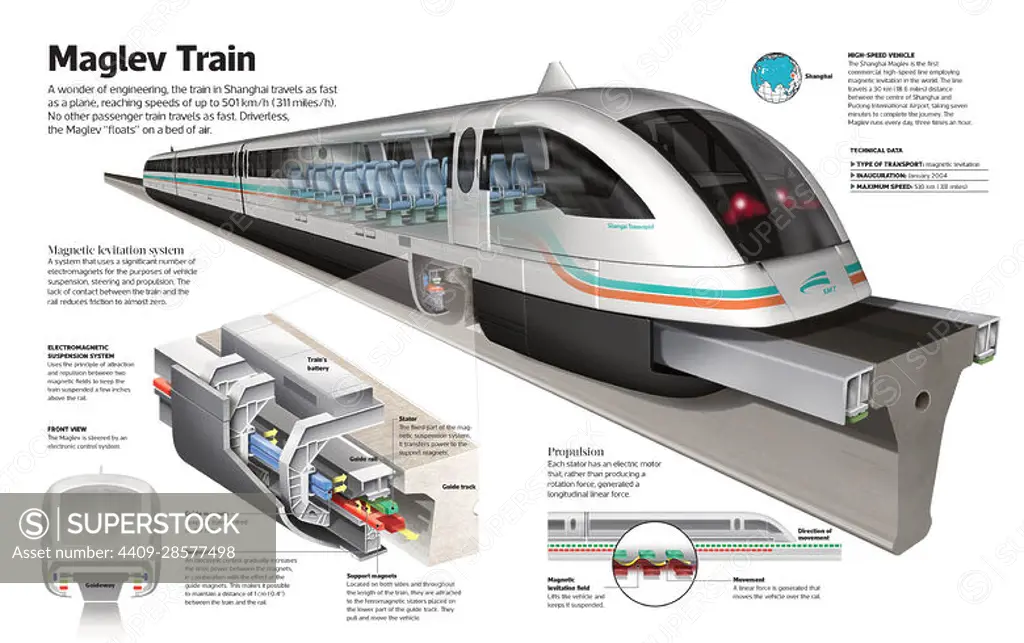
Imagine being able to travel from New York to Los Angeles in under 7 hours, without having to deal with the hassle of airport security or the stress of driving. Sounds like a dream, right? With Maglev train technology, this dream could soon become a reality, making long-distance travel faster, smoother, and more enjoyable.
The idea of Maglev trains might seem like something out of a sci-fi movie, but it's actually based on some pretty cool science. Magnetic levitation is the key to making these trains work, using powerful magnets to lift and propel the train at incredible speeds, making it feel like you're floating on air. It's a bit like when you use a magnet to pick up a paper clip, but instead of a paper clip, it's a whole train!
How Does it Work?
So, how exactly do Maglev trains work? It's actually pretty simple: the train is equipped with magnets that create an upward force, lifting the train off the track, and then another set of magnets propels it forward, using electromagnetic forces to accelerate the train to incredible speeds. It's a bit like when you're on a skateboard, and you push off with one foot to get moving, but instead of using your foot, the train uses magnets.
Must Read
One of the coolest things about Maglev trains is that they're virtually silent, making them a much more pleasant way to travel than traditional trains or cars. Imagine being able to have a conversation with your seatmate without having to shout over the noise of the engine! It's a bit like being in a library, but instead of being surrounded by books, you're surrounded by the countryside whizzing by outside your window.
 maglev train showing magnetic levitation, propulsion system, guidance
But why should you care about Maglev train technology? For one thing, it has the potential to revolutionize the way we travel, making it faster, cleaner, and more efficient. Imagine being able to visit your family who live on the other side of the country, without having to deal with the hassle and expense of flying. It's a bit like having a superpower, but instead of flying or super-strength, it's the ability to travel quickly and easily.
What's Next?
So, what's next for Maglev train technology? There are already several countries around the world that are investing heavily in Maglev trains, including Japan and China. In the US, there are plans to build a Maglev train line between Washington DC and Baltimore, which could reduce travel time between the two cities to just 15 minutes. It's a bit like having a time machine, but instead of going back in time, you're traveling quickly and easily through space.
 How Superconductor Trains Work: The Science Behind Maglev Technology
Of course, there are still some challenges to overcome before Maglev trains become a reality, such as cost and infrastructure. But with the potential benefits of faster, cleaner, and more efficient travel, it's an exciting technology to watch. Who knows, maybe one day we'll look back on traditional trains and cars the way we look back on horse-drawn carriages - as relics of a bygone era.
In conclusion, Maglev train technology is an exciting and innovative way to travel that has the potential to transform the way we live and work. Whether you're a daily commuter or a frequent traveler, Maglev trains could make your life easier, faster, and more enjoyable. So next time you're stuck in traffic or waiting in line at the airport, just remember: there's a better way to travel, and it's coming soon to a station near you!
