What Does Khz Mean

Have you ever found yourself browsing through tech specs or audio equipment and stumbled upon the term kHz? You might have wondered, what does it even mean? Is it something th...
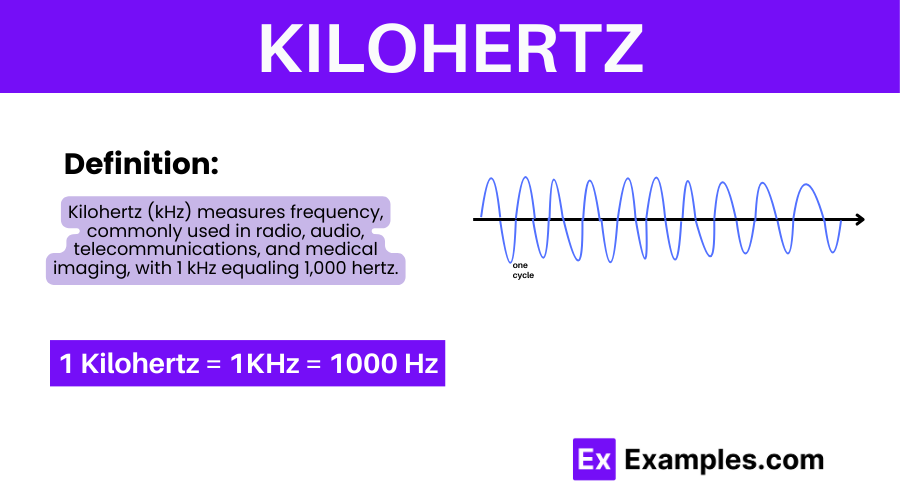
Have you ever found yourself browsing through tech specs or audio equipment and stumbled upon the term kHz? You might have wondered, what does it even mean? Is it something that's going to change your life or just a bunch of technical jargon?
So, let's break it down - kHz stands for kilohertz, which is a unit of measurement for frequency. Think of frequency like the number of times something happens in a second - like how many times a bird chirps or a wave crashes on the shore. It's a pretty cool concept, right?
What's the big deal about kHz?
The reason kHz is important is that it helps us measure the frequency of sound waves. For example, when you're listening to your favorite music, the sounds you hear are made up of different frequencies, ranging from low rumbles to high-pitched squeaks. It's like a recipe for your favorite dish - the right mix of ingredients (frequencies) makes all the difference!
Must Read
Now, you might be wondering, what's the range of kHz we're talking about? Well, human hearing typically ranges from about 20 Hz (that's 20 cycles per second) to 20,000 Hz (20 kilohertz). That's a pretty wide range, and it's what makes music and sound so rich and complex. It's like having a big box of crayons - the more colors (frequencies) you have, the more detailed and vibrant your picture (sound) can be!
But here's the thing - kHz isn't just limited to sound. It's used in all sorts of fields, like electronics, physics, and even medicine. For instance, kHz is used to measure the frequency of radio waves, which is how we get our favorite radio stations. It's like having a special key that unlocks a whole new world of possibilities - who knew kHz could be so cool?
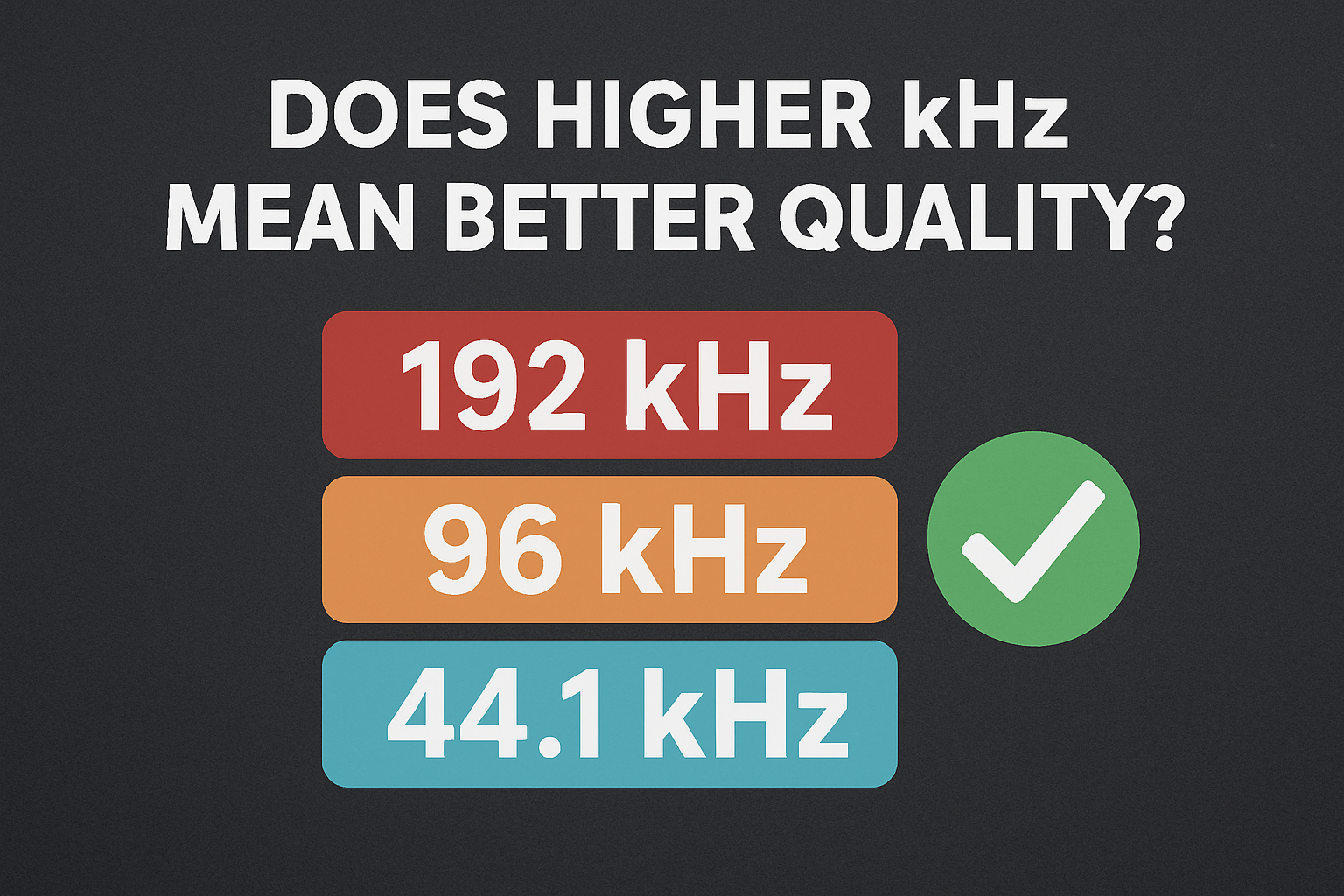 Does Higher kHz Mean Better Quality? The Truth Behind Audio Sample
How does kHz affect our daily lives?
So, how does kHz impact our daily lives? Well, for one, it helps us enjoy our music and podcasts with better sound quality. But it also plays a role in things like medical imaging, where high-frequency waves are used to create detailed images of our bodies. It's like having a superpower - the ability to see inside ourselves and understand how our bodies work!
And let's not forget about technology - kHz is used in all sorts of gadgets and devices, from smartphones to computers. It's what makes our devices tick, and it's what allows us to communicate with each other over long distances. It's like having a magic wand - with kHz, we can make all sorts of amazing things happen!
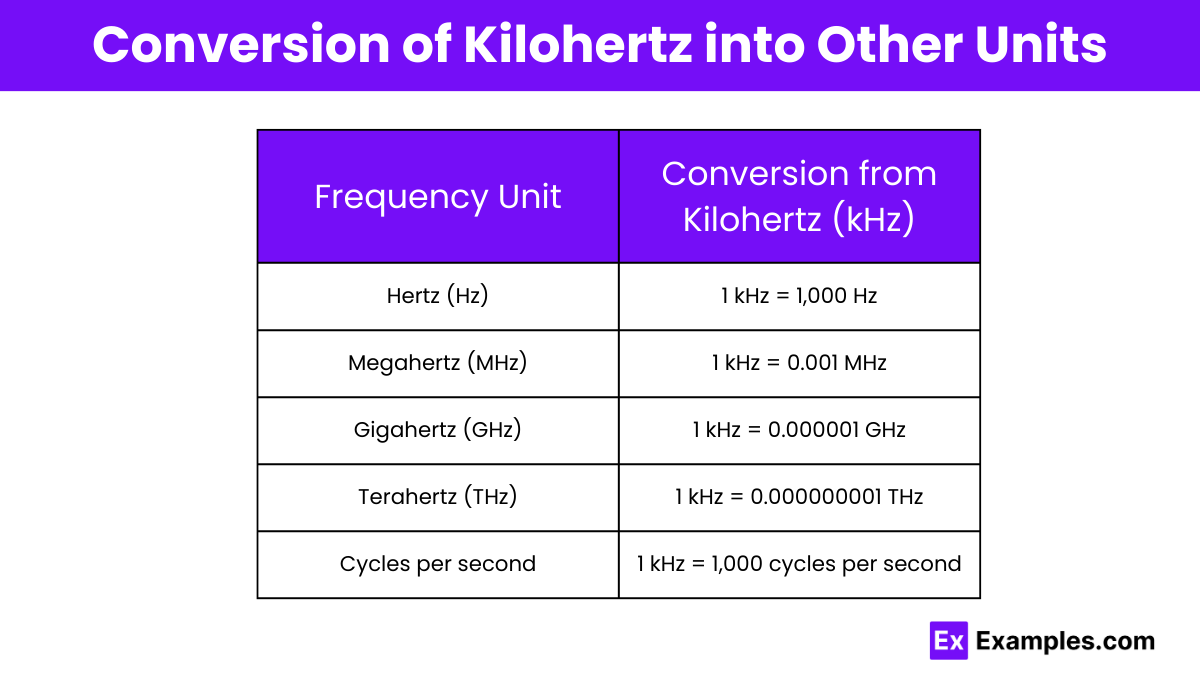 Kilohertz - Formula, Differences, Usages, Examples | Examples.com
So, there you have it - kHz is more than just a technical term, it's a key to understanding the world around us. It's a reminder that there's always more to learn, and that even the most seemingly complex concepts can be pretty cool once you scratch the surface. Who knew that something as simple as a unit of measurement could lead to so many amazing discoveries and innovations?
As we wrap up this journey into the world of kHz, we hope you've had as much fun as we have exploring this fascinating topic. It's a frequency of knowledge that's always in tune with our curiosity, and we can't wait to see what other secrets it holds. Until next time, stay curious and keep on learning - the world of kHz is waiting for you!
