How To Solve For Sin Cos Tan

So, you're probably thinking, what's the big deal about sin, cos, and tan? Well, let me tell you, these three letters are not just some random math terms, they're actually the...
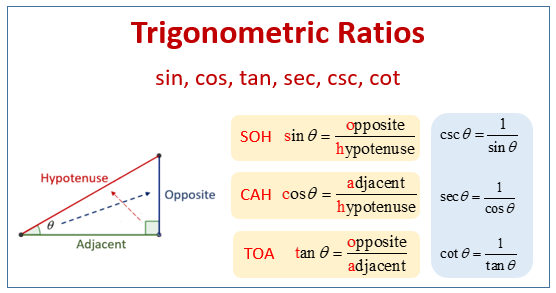
So, you're probably thinking, what's the big deal about sin, cos, and tan? Well, let me tell you, these three letters are not just some random math terms, they're actually the key to unlocking a world of problem-solving goodness! Imagine being able to figure out the height of a tree just by looking at its shadow, or calculating the distance to a landmark using just a few simple steps.
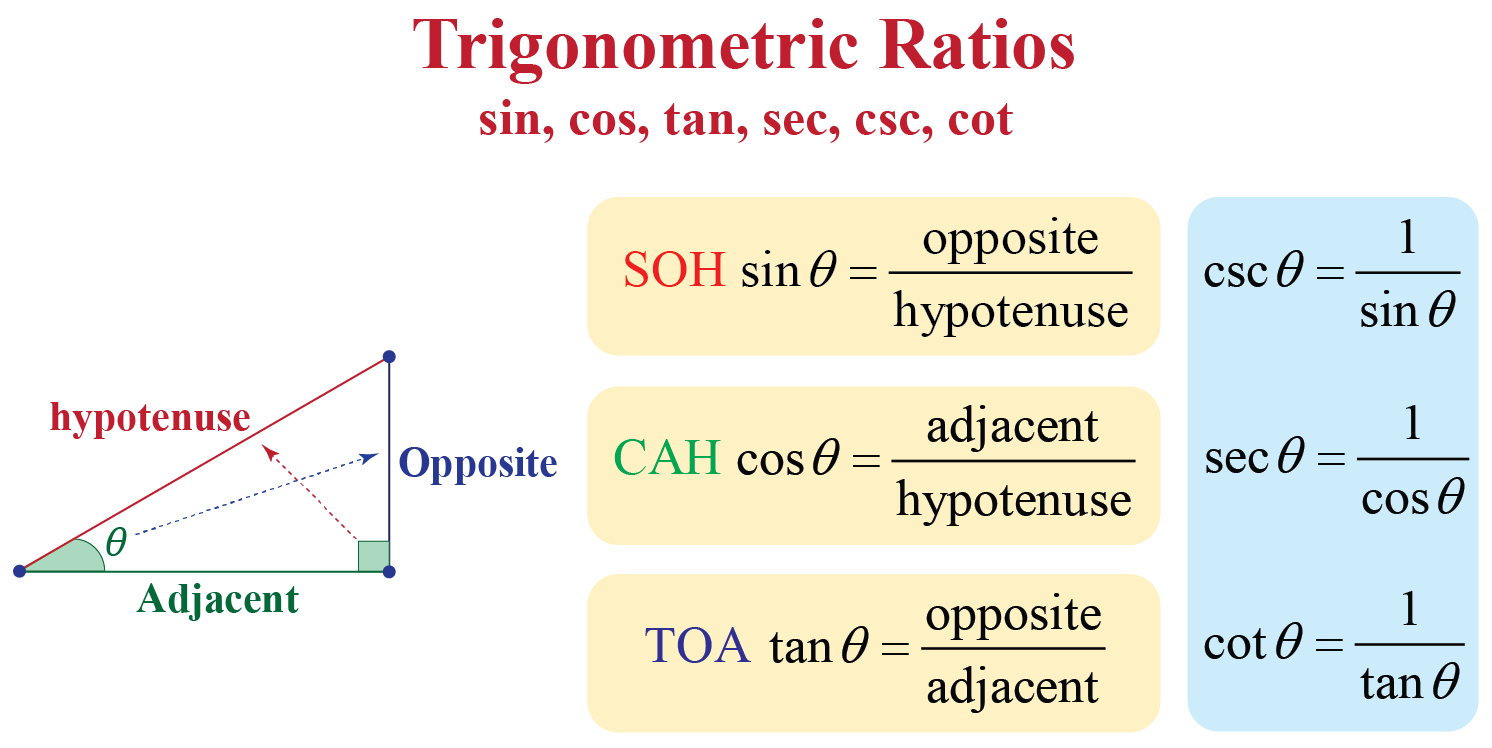
But before we dive into the fun stuff, let's talk about what sin, cos, and tan actually mean. In a nutshell, they're just ratios of the sides of a triangle, with sin being the ratio of the opposite side to the hypotenuse, cos being the ratio of the adjacent side to the hypotenuse, and tan being the ratio of the opposite side to the adjacent side. Think of it like a recipe, where you plug in the ingredients (the sides of the triangle) and get the desired result (the ratio).
The Magic of Right Triangles
Now, you might be wondering, why do we need to care about right triangles and these fancy ratios? Well, my friend, it's because right triangles are all around us, even in our daily lives! For example, when you're building a bookshelf, you need to make sure the shelves are level and the frame is sturdy, which involves using right triangles to calculate the correct angles and sides. It's like being a master builder, using math as your trusty sidekick to get the job done.
Must Read
But here's the thing, sin, cos, and tan aren't just limited to triangles, they can be used to model all sorts of real-world phenomena, like the motion of a pendulum or the growth of a population. It's like having a superpower, where you can use these simple ratios to understand complex systems and make predictions about the world around you. And the best part? It's not just for rocket scientists and math whizzes, anyone can learn to use sin, cos, and tan to solve problems and make sense of the world.
So, how do you actually solve for sin, cos, and tan? Well, it's quite simple really, you just need to know the lengths of the sides of the triangle and plug them into the formulas. For example, if you know the length of the hypotenuse and the opposite side, you can use the sin formula to calculate the ratio. It's like following a recipe, where you plug in the ingredients and get the desired result. And with practice, you'll become a pro at solving for sin, cos, and tan in no time!
 Trigonometric Ratios Of Standard Angles – BDNE
Real-World Applications
Now, let's talk about some real-world applications of sin, cos, and tan. For instance, in navigation, pilots use these ratios to calculate distances and directions, ensuring they stay on course and arrive at their destination safely. It's like having a map, where you use sin, cos, and tan to chart your course and navigate through the world. And in physics, these ratios are used to model the motion of objects, from the trajectory of a projectile to the oscillations of a spring.
But it's not just limited to science and technology, sin, cos, and tan can even be used in art and design! For example, architects use these ratios to design buildings and bridges, ensuring they are structurally sound and aesthetically pleasing. It's like being a master artist, using math as your brush to create beautiful and functional works of art. And who knows, you might just discover a new passion for math and problem-solving, and unlock a world of creative possibilities.
So, there you have it, a brief introduction to the wonderful world of sin, cos, and tan. It's a world of problem-solving, critical thinking, and creativity, where math is not just a subject, but a tool for understanding and navigating the world around us. And with practice and patience, you can become a master of sin, cos, and tan, and unlock a world of possibilities and adventures. So, go ahead, give it a try, and see where math takes you!
